Mortar, Pointing, and the Temptation to Make a Wall Look New
Fresh, even pointing can make an old wall look tidy while concealing choices that affect how it deals with moisture. Learn what to ask before repairs begin.
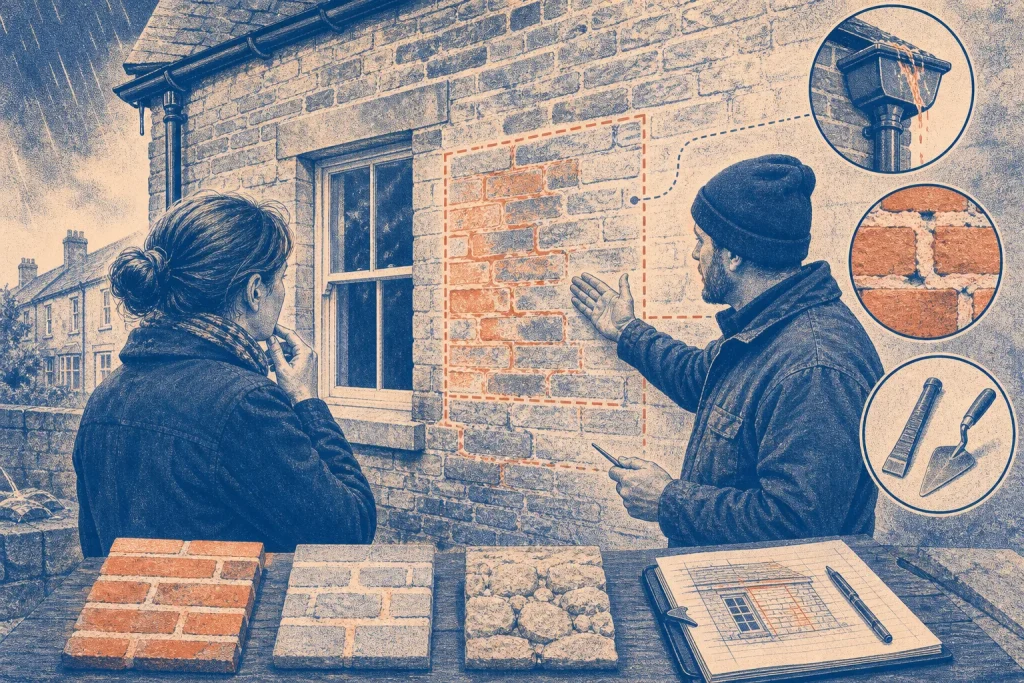
Should the joints in an old wall be made crisp and uniform, or repaired to suit the masonry already there? Before choosing a finish, ask what is failing and what the proposed work is meant to change. Pointing is the exposed mortar between bricks or stones; repointing means removing failed mortar and filling the joints again. The right approach depends on the wall, its exposure and the condition of its materials.
Mortar and masonry
A repaired joint that crumbles or pulls away may have been poorly applied, or the replacement mortar may not suit the existing masonry. Those possibilities are not enough to diagnose a wall from its appearance alone. Older buildings can contain different bricks, stones and mortars, sometimes from separate phases of work.
Ask the contractor to explain how the existing mortar was assessed and why the proposed mix is appropriate for this particular wall. The answer should address the masonry and the intended finish, rather than relying only on a colour match or a claim that one mortar suits every building. For a fragile or historically significant wall, consult a conservation-accredited professional or another qualified specialist before agreeing to extensive work.
Request a small trial area and review it before the repair spreads across the wall.
Moisture and staining
A damp patch can have several possible causes, including rainwater spilling from a gutter or pipe, a leak, or ground conditions. Repointing alone cannot establish which is responsible. Nor can a change in the appearance of a patch, by itself, confirm that a mortar choice caused it.
Look for visible clues such as an overflowing hopper head, a cracked downpipe, a leaking sill or ground piled against the wall. Note where staining appears and whether it is close to a roof junction, drain or other feature. Avoid covering the area with a surface coating before the source has been considered; ask a suitable building professional for advice if the cause is unclear or the wall is deteriorating.
Say you notice a damp patch beneath a blocked hopper head on a period house. In this invented situation, the starting point is visible water spilling from the hopper during rain. You arrange for a competent person to clear the blockage and inspect the pipe joints. If water then runs through the pipe rather than spilling down the wall, that is an observable change; it does not establish whether the masonry needs repair. If the patch remains or the cause is uncertain, ask a qualified professional to assess it before commissioning further treatment.
Brick edges and tools
Chipped brick edges, known as arrises, can be a sign that the masonry has been damaged, though the cause should be assessed rather than assumed. Mortar removal methods and joint profiles are details to discuss with the person doing the work. A uniform channel cut through every joint may remove sound material as well as failed mortar.
Ask which tools will be used, how the work will be limited to the affected joints, and how the brick or stone faces will be protected. Inspect the trial area in daylight. Look for chipped edges, mortar sitting beyond the masonry, and a profile that differs sharply from neighbouring joints. If the sample shows damage or an unsuitable finish, pause and ask for a revised method; if it appears sound, still agree the scope before work continues.
Colour and appearance
Fresh mortar can look different from weathered joints, and its appearance may change as it dries. A demand for perfect uniformity can lead to removal of material that is still sound. Ask whether the aim is to stabilise failed joints or to alter the wall’s overall appearance, and whether repairs can be confined to areas that need them.
Review a sample after it has dried, both close up and from the pavement. If it clashes strongly with the surrounding work, ask whether the mix or finish can be adjusted; if it sits comfortably, use it as the agreed reference rather than expecting every old joint to look identical.
Scope and consent
A contractor may find more loose mortar once work begins. That can change the proposed scope, so agree in advance how new findings will be reported and approved. Ask for the affected areas to be marked on a photograph or drawing, and for the proposal to describe the removal method, replacement materials and treatment of unexpected damage.
If the building is listed or lies in a conservation area, check with the local planning authority whether consent is needed before commissioning changes. For uncertain or substantial repairs, a qualified conservation professional can help assess the wall and review the proposed work.
- Check whether the proposal identifies the particular joints to be repaired; if it does, compare those areas with the wall before work starts, and if it does not, ask for marked photographs or drawings.
- Check whether the contractor explains how the existing mortar was assessed; if the explanation is specific to the wall, ask how it informs the proposed mix, and if not, request a qualified assessment before extensive work.
- Check whether the removal method and tools are described; if the plan limits removal to failed mortar and addresses fragile masonry, agree the trial area, and if it does not, ask for a revised method before work begins.
- Check the trial area for chipped brick or stone edges; if damage is visible, pause and seek an explanation and amended approach, and if no damage is visible, inspect the profile and colour before approving wider work.
- Check whether the sample has dried before judging its colour; if it fits the surrounding wall, record it as the reference, and if it does not, discuss a revised sample rather than asking for a uniform finish across the whole elevation.
- Check whether unexpected defects require your approval under the proposal; if they do, use that process when the scope changes, and if they do not, clarify the approval process in writing before work starts.
- Check whether the building’s listed or conservation status may affect the work; if it may, ask the local planning authority about consent before commissioning changes, and if it does not, keep the status check with the project papers.
Imagine a fictional owner whose mason proposes repointing an entire street-facing wall, though loose joints are visible only around one window. The owner starts with that marked area and requests a trial patch, a description of the mortar assessment and the removal method, plus written approval before any extra joints are opened. The trial later shows chipped brick edges. The owner pauses the work and asks for a revised method and another review before deciding whether to proceed. The trade-off is a slower decision in exchange for not expanding a repair whose effect on the masonry is uncertain.
Repair without erasure
A proposal should explain what will be repaired, how the work will be carried out and how changes in scope will be handled. If those points remain vague, delay approval and ask for clarification. Where the material is fragile or the cause of deterioration is uncertain, get advice from a qualified specialist before deciding on a broader intervention.
Keep the agreed photographs, sample and work description with the building’s papers. They give a future owner or repairer a useful account of what was changed and what was left alone.