The Building Everyone Calls by Its Old Name
A familiar name can outlast a building’s original purpose. Learn how to record who uses it, what it signals in conversation and how to share that knowledge without turning it into a claim about everyone.
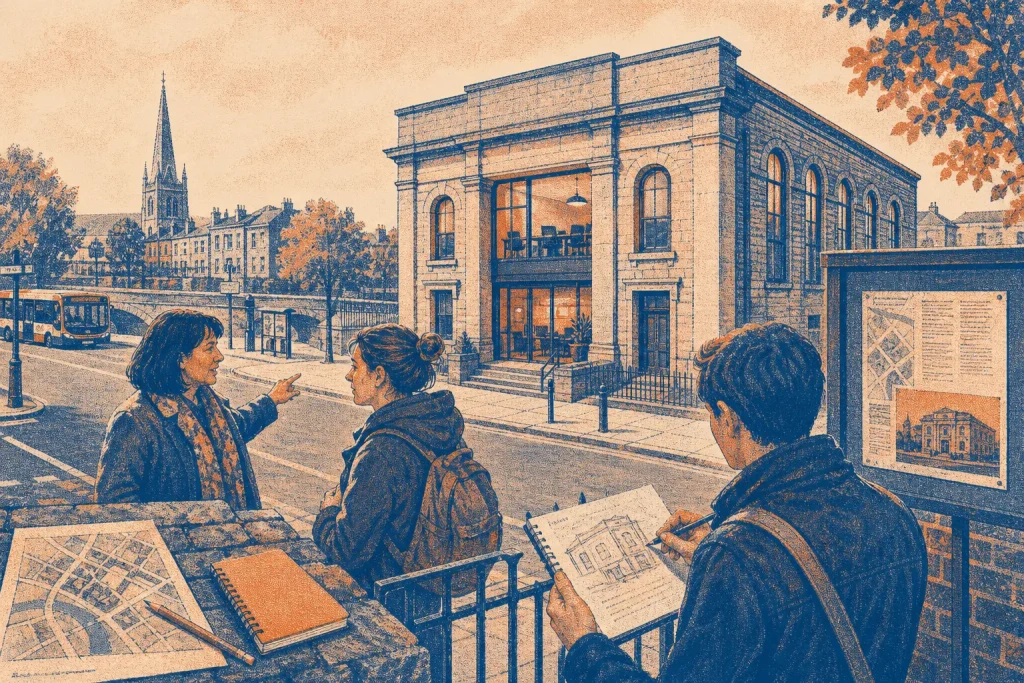
“Meet me by the old library,” someone says, though the library became flats years ago. The question is not only what the building used to be. It is what the old name does in conversation: perhaps it gives directions, recalls a service, or marks a shared meeting place. Recording that use means listening to how a name works now, rather than trying to settle one official version of the past.
Start with the words people use, then look at the situations in which they use them. A familiar name can help people find a place even when its original purpose has ended. It can also exclude people who know the building by another name, or who have no reason to know its history. A useful account shows the name’s reach and limits without claiming to speak for a whole town.
Words in use
Write down the name exactly as you hear it, including shortened forms and nicknames. “The old library”, “the library” and “the Lib” may carry different associations. Note where the words appeared: in directions, a family story, a notice, or a conversation about the building’s current use. Keep the speaker’s phrasing separate from your own explanation.
Next, note what the name helps someone do. Does it identify the building more clearly than its street address? Does it refer to a former service, or does it simply remain a familiar landmark? A name may be practical without signalling nostalgia or agreement about the building’s history.
Make a working note with four fields: the name, where you heard it, the conversational purpose, and anything you still need to check. If a contributor does not want to be identified, use a private code and store contact details apart from their recollection.
Record the words and their setting before deciding what they mean.
Place and purpose
Visit the site and record what is visible from public space: its current use, entrances, signs and position on the street. If the old name appears on a plaque, map or noticeboard, note the source and setting. A sign documents a choice made for that context; it does not tell you how every resident speaks.
A small sketch or map can help distinguish the building from a neighbouring site with a similar local name. Use clear landmarks such as the bridge, green or bus stop. If street numbering has changed, note that as a question for checking rather than assuming the address has always referred to the same structure.
Think about who might use the name and for what purpose. A former worker, a nearby resident, someone who used the building’s services and a newer arrival may each know a different version. The aim is not to collect a representative sample, but to make the scope of the conversations clear.
Different audiences
Ask open questions that do not supply an answer in advance. “What do you call this building?” is a good start. Follow with “Where would you use that name?” or “Who taught you to use it?” Ask what the person did there, if anything, and what name others around them used. If they are unsure when a name began, preserve that uncertainty in their own words.
Imagine you are speaking with two people about a former cinema now used as offices. A neighbour calls it “the cinema” when giving directions because that is the landmark her family has always used. A newer resident says “the offices” and recognises the older name only after hearing it from someone else. Their accounts describe different audiences and uses of the name; neither needs to be treated as the town’s single voice.
Before recording audio, explain how you may use it and ask permission. Offer note-taking instead. Ask whether the contributor is comfortable being named, quoted or described without identifying details. A private conversation can still inform your understanding without being published.
Evidence and limits
Records can help answer specific questions about a place. A historic map may help establish a site’s location; a trade directory or newspaper notice may show that a service operated there; a photograph may preserve a sign as it appeared at a particular time. Check that each item refers to the same building, especially if the street was renumbered or a structure was replaced.
Each source has limits. A directory may identify a business but not the name customers used in conversation. A photograph can show a sign without revealing how long it remained. An official label may differ from the name used by families. Record what the source can support, and do not use it to overwrite someone’s account of ordinary speech.
Keep a separate note for each contributor and each documentary source. If a recollection and a record point in different directions, ask whether they concern different periods, buildings or meanings. If you cannot resolve the difference, describe it plainly and leave the question open.
Use records to clarify the place, not to flatten the ways people talk about it.
Public wording
When sharing the material, describe who used the name and in what setting. “Several former users call it the library when giving directions” is more precise than “The town calls it the library”. If you spoke with only a few people, say so. Distinguish names heard in conversation from labels found on maps or signs.
Offer contributors the chance to check how their words are attributed and to correct a transcription or consent choice. Keep later corrections apart from the original notes, so it remains clear what changed. Do not publish sensitive family or employment details unless the person has agreed and there is a sound reason to include them.
An old building name can remain useful because it helps people orient themselves, even after the original use has ended. Recording where and by whom it is used gives future readers something more precise than a claim of shared memory: a view of how a place continues to function in local conversation.